Integrals Power develops sustainable iron phosphate process for LFP battery materials

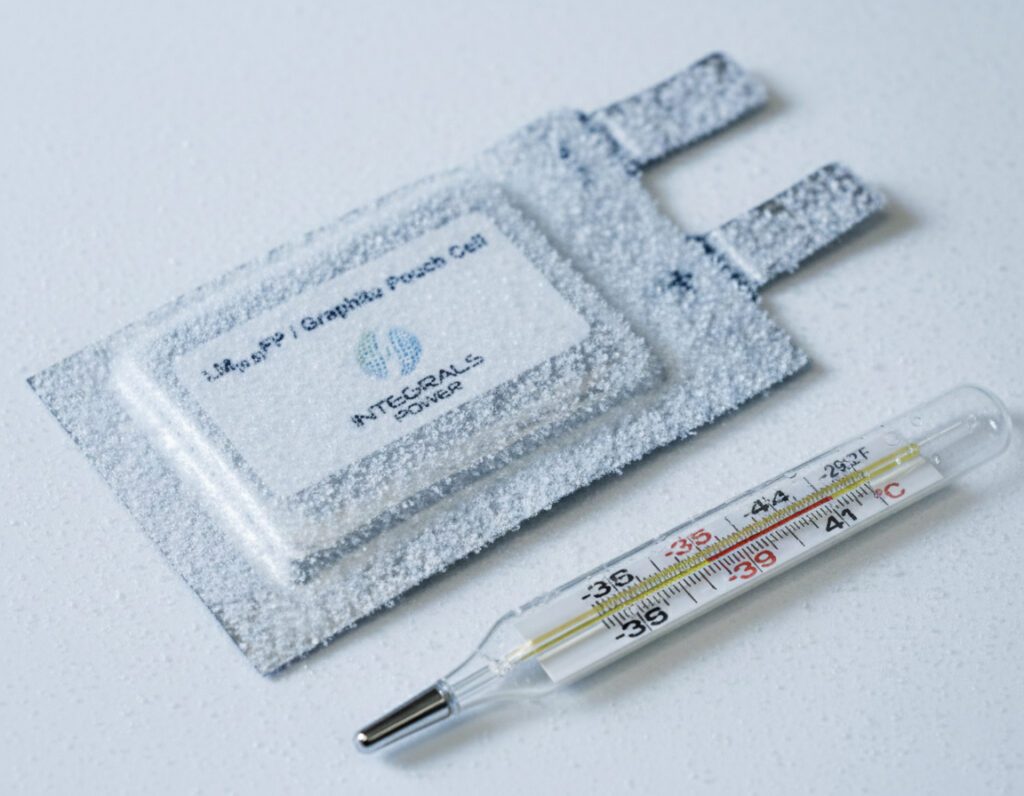
Durability and performance of Integrals Power LMFP cells proven in cycle testing by QinetiQ
15th February 2026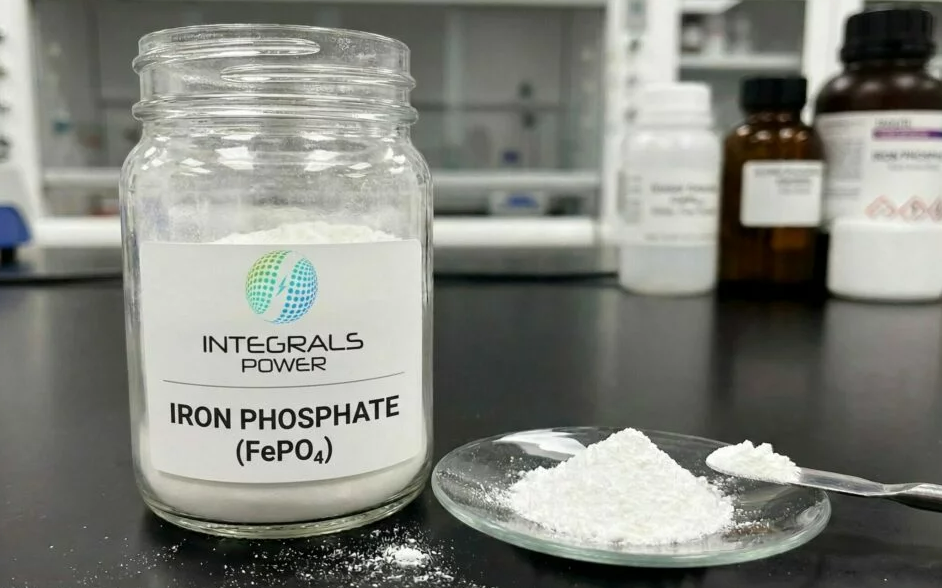

UK battery materials developer Integrals Power says it has developed a new manufacturing route for iron phosphate, a key precursor used in lithium iron phosphate (LFP) cathode materials, at its facility in Milton Keynes.
The company said the process uses a low-temperature synthesis method designed to reduce energy consumption and associated carbon emissions compared with conventional production techniques. The approach also avoids dependence on by-products from other industrial sectors and is intended to produce high-purity iron phosphate with tightly controlled particle characteristics.
Iron phosphate is a critical raw material in the manufacture of LFP cathode materials, a battery chemistry widely used in stationary energy storage systems and increasingly adopted in electric vehicles because of its relatively low cost and high safety characteristics. However, most of the global supply of both iron phosphate and LFP cathode materials currently originates in China.
Integrals Power said it had successfully produced a range of iron phosphate material specifications using the new process, which were subsequently used to develop lithium iron phosphate cathode materials. According to the company, these materials have been tested at cell level in collaboration with a UK university, with the results indicating performance comparable with, or exceeding, benchmark samples sourced from Chinese suppliers.
The company said the work demonstrates the potential for producing iron phosphate using raw materials sourced from regional supply chains, which could help support the development of LFP battery manufacturing capacity in the UK, Europe and North America.
According to the International Energy Agency, LFP batteries accounted for more than 10% of Europe’s electric vehicle battery market in 2024, following two consecutive years of around 90% growth. The IEA has also noted that nearly all LFP batteries used in Europe are currently manufactured in China, highlighting potential supply chain risks for European vehicle manufacturers.
The issue has gained further prominence following export controls introduced by China covering certain battery materials and manufacturing technologies. At the same time, the development of regional battery supply chains is being encouraged by policy and regulatory measures in Europe and North America.
In the EU and UK, for example, rules of origin provisions governing electric vehicle trade are scheduled to tighten from 2027. To avoid tariffs, at least 55% of the overall value of an EV, along with defined shares of battery cells and packs, must originate in the EU or UK. Similar localisation pressures are emerging in other regions as governments seek to strengthen domestic battery industries.
The importance of LFP batteries is also growing in the stationary energy storage sector. Data from the IEA suggests that more than 90% of grid-scale battery energy storage systems deployed globally use LFP chemistry, reflecting its cost advantages and long cycle life.
Integrals Power said it has also filed patents covering innovations across more than 20 cathode active materials, including LFP. The company argues that the chemistry still offers considerable scope for improvement, particularly in applications where cost, safety and durability are key requirements.
Iron phosphate samples to be delivered to partners
Over the coming months, Integrals Power plans to supply iron phosphate and LFP cathode samples to automotive manufacturers, battery cell producers and other strategic partners as part of validation programmes. These tests are intended to benchmark performance across different applications and represent a step towards broader industrial adoption.
Subject to successful qualification by customers, the company said it plans to expand precursor and cathode production capacity to support commercial manufacturing and potential long-term supply agreements in the UK, Europe and North America.
Integrals Power founder and CEO, Behnam Hormozi, said: “Almost every LFP battery in use today traces its supply chain back to China. We’ve spent years developing a way to change that – and now we can show it works, it’s cost-competitive, and it’s ready to scale. By rethinking the chemistry from first principles, we’ve developed a manufacturing process for the Iron Phosphate precursor that is cleaner, more energy-efficient and – as our testing confirms – produces a better material. It’s a breakthrough that represents the foundations on which a viable Western LFP supply chain can be built, and for EVs, grid energy storage, and the data centres that power AI, this is of paramount importance.”
Read more here